What’s the manufacturing process of lithium-ion cells?
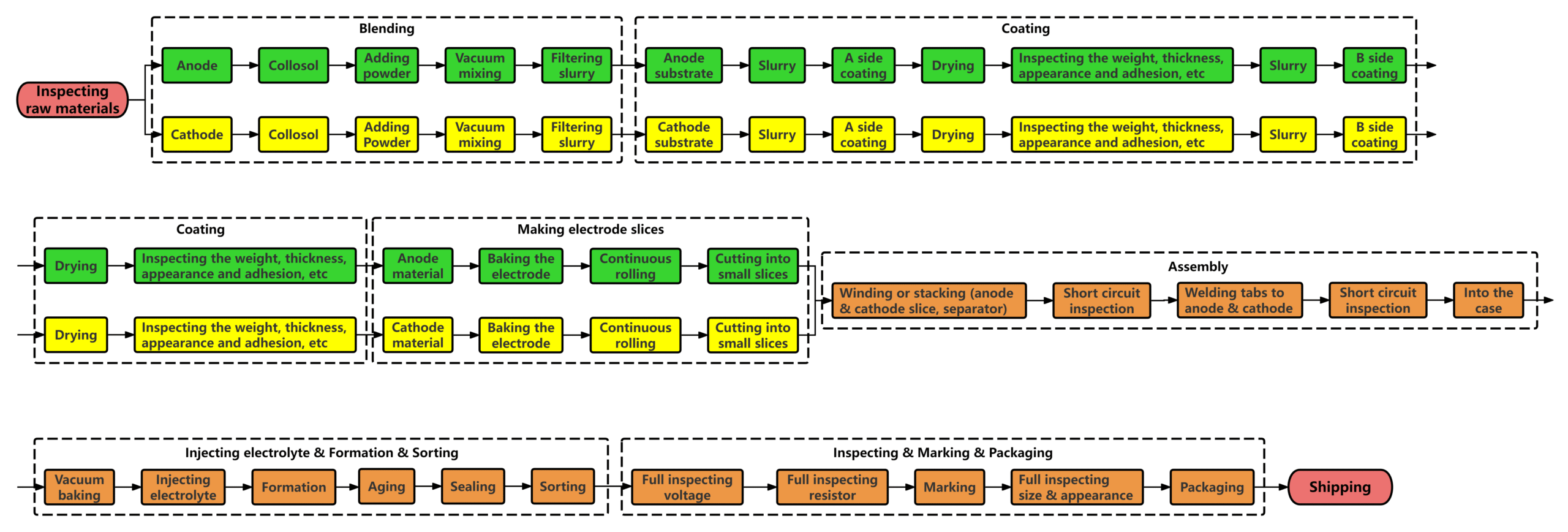
The manufacturing process of lithium-ion cells mainly consists of six parts: blending, coating, making electrode slices, assembly, injecting electrolyte & formation & sorting, and inspecting & marking & packaging. The manufacturing cycle is generally 16 – 22 days.
Pre-manufacturing preparation: Inspect raw materials;
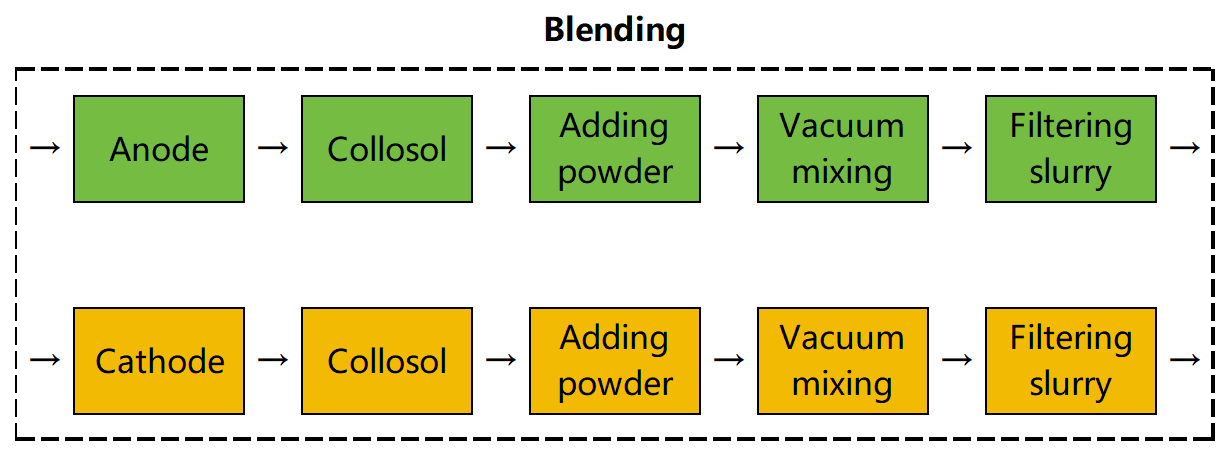
1. Blending: Mix the raw materials for the anode and cathodein a vacuum mixer according to a certain ratio to form a slurry;
2. Coating: Apply the prepared slurry evenly to both sides of the anode and cathode;

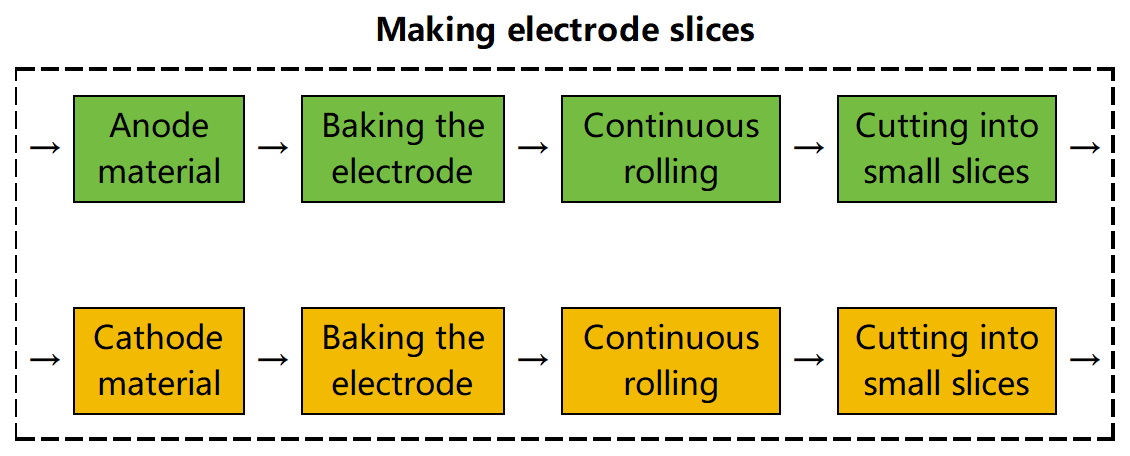
3. Making electrode slices: Bake the coated anode and cathode substrates, continuously rolled them, and cut them into small slices;
4. Assembly: The anode slices, cathode slices, and separators are rolled or laminated into small blocks, then welded with tabs and inserted into the cases;

5. Injecting electrolyte, Formation and Sorting: Bake the assembled cell cores in a vacuum and inject them with electrolyte; charge the cells to activate them; sort the cells according to their capacities after sealing;

6. Inspecting& Marking & Packaging: Inspect the voltage and resistance of all cells to ensure their quality; mark the cells with information such as capacity and voltage according to client requirements; package the cells to prevent damage during storage and transportation;

After manufacturing is completed, the cells will be delivered to the client. The entire process is as follows: